The announcement
Adyen and FC Bayern Munich announced an extension of their payment partnership on 12 October 2026. Adyen reports that average stadium payment processing time fell from 30 seconds to 27 seconds, supporting approximately 10% more kiosk transactions on match days. The release also describes unified payment services across stadium, retail and online channels. These are results reported by the participating companies, rather than an independent estimate that every venue can reproduce.
NXBits analysis: the value of a second depends on demand
Saving a few seconds can sound modest when considered as an isolated transaction. Its value changes when a large number of customers want service during a short interval. A venue's demand is concentrated around the event schedule. That makes the time available to complete a sale a scarce operating resource. Payment performance should be assessed within that resource constraint, alongside staffing, food preparation and the layout of the concession area.
Our reading is that the announcement illustrates how payment infrastructure can affect a physical business process. It does not mean a faster authorization automatically produces the same percentage increase in sales. If another step remains the bottleneck, the gain may appear as a shorter queue or a better customer experience. A venue needs to measure the whole service journey to understand where the benefit actually occurs.
Measure the complete checkout journey
A useful measurement starts before the terminal is presented. It can include selecting items, confirming the order, preparing the purchase, paying and handing over the goods. Teams should identify which interval a reported metric covers. A reduction in payment processing time is different from a reduction in the complete customer visit. Both can matter, but they should not be used interchangeably when building a business case.
Operators can compare busy and quiet periods to find where delays accumulate. A process that performs well during low demand may behave differently when terminals, staff and connectivity are under pressure. Testing should reflect that peak period. The objective is to understand the constraint well enough to improve it, not simply to obtain the fastest single transaction that can be demonstrated under ideal conditions.
Reliability is part of transaction speed
A quick successful payment is only part of a venue's requirement. Staff need a clear response when a transaction is declined, times out or completes after the cashier has moved on. A confusing result can consume more time than a small improvement saves across many ordinary purchases. The device should show what action is appropriate and help prevent an accidental second charge.
Connection design should match the actual location. An outdoor stall, a permanent kiosk and a roaming vendor may require different arrangements. Equipment should be tested where it will be used, with realistic demand and movement. An operating plan should explain how staff handle a temporary outage and which payment options remain available. Resilience needs to be part of training, not just a technical specification in a contract.
Use one customer view carefully across channels
A venue may sell merchandise online, take payments in stores and operate temporary event locations. Connecting those channels can help create consistent records, but the customer journeys are different. A refund at a physical store may relate to an online order. Staff need a reliable way to identify the sale and apply the correct policy without collecting unnecessary information from the customer.
Commercial reporting should preserve the distinctions that matter to the business. Managers may need to understand performance by stand, event, product category and payment route. Combining all transactions into one dashboard is not enough if it hides those differences. Useful integration makes data easier to compare while allowing teams to investigate a particular location or payment outcome when something changes.
Local payment choices need an operating plan
International visitors may recognize different payment methods, and an unfamiliar checkout can slow a sale. Merchants should select methods around actual customer demand and test the interface with staff. Each added option also needs a refund process, receipt treatment and support guidance. A broader menu should make the customer journey easier rather than give a cashier more unexplained choices during the busiest minute of an event.
Training can focus on the few situations staff are most likely to encounter: a wallet that does not confirm, a payment that appears duplicated, a customer requesting a receipt and a refund after the event. Simple scripts and visible transaction records can help. The goal is to reduce the number of decisions a temporary or roaming member of staff must improvise while a queue is growing.
How other venues can evaluate the lesson
A venue considering a change should establish a baseline for complete service time, successful purchases, abandoned queues and payment-related interventions. It should pilot a change in comparable conditions and record whether the bottleneck moves elsewhere. A technology project that improves one step may create a new pressure on preparation or collection. That is useful information for the next operational decision.
We would judge success through a combination of customer experience and dependable service delivery. The strongest case connects better payment handling to a measurable improvement in the venue's own process. Adyen's reported results provide a current example to examine. Other operators should use them as a prompt to investigate their own checkout constraints, with realistic expectations about equipment, staff, demand and the time available to serve customers.
Sources and further coverage
Follow our merchant acquiring coverage and read the editorial policy. Corrections and correspondence: info@nxbits.com.
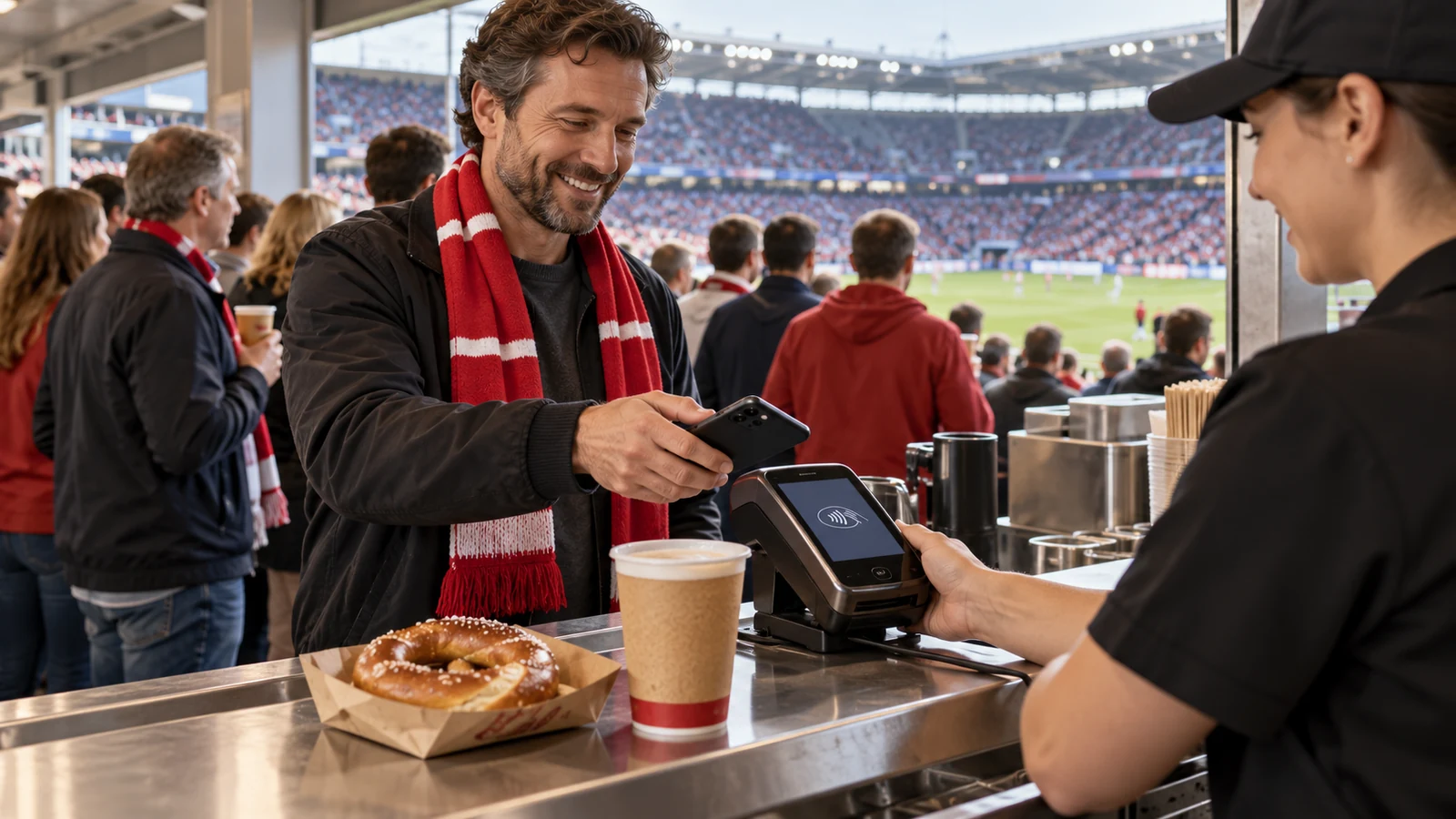
Cover: AI-generated conceptual illustration for NXBits Payments News; not a photograph of an actual event.