What happened
Adyen announced on July 1, 2026 that it had closed its acquisitions of Talon.One, a loyalty and incentives platform, and Orb, an enterprise billing platform. The company also announced product and finance leadership updates as it begins integration. The transaction is significant because it expands Adyen's role from payment processing into adjacent merchant revenue infrastructure.
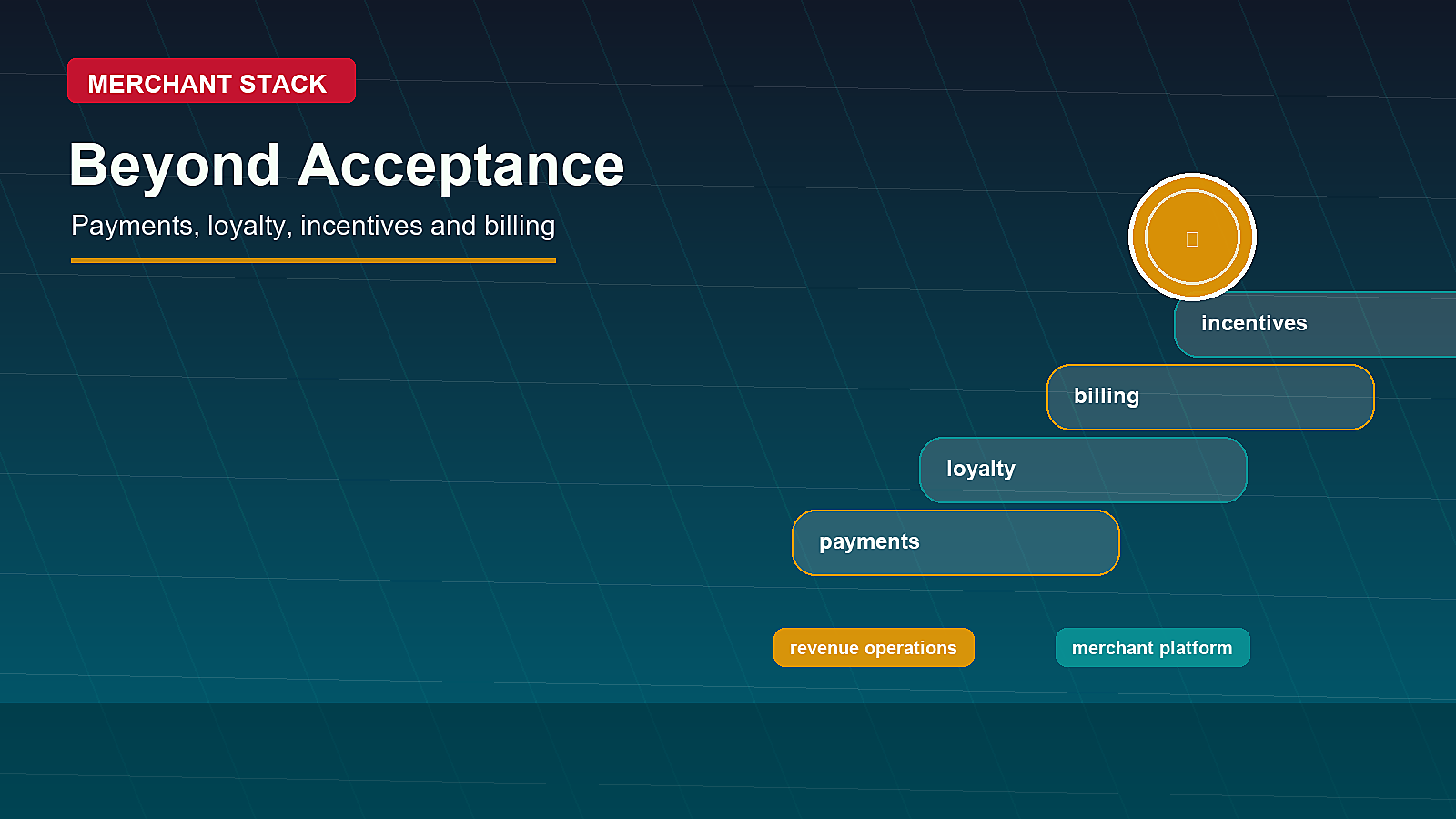
Talon.One brings promotion, loyalty and incentive decisioning. Orb brings flexible enterprise billing. Together, they touch two areas that often sit near payments but outside the traditional acquiring stack: how merchants price, reward and retain customers, and how they monetize complex usage-based or subscription products. Bringing those functions closer to payments can create a more complete commerce operating layer.
Why it matters
Payment acceptance has become table stakes for enterprise commerce platforms. Merchants now want unified data, revenue optimization, loyalty decisioning, customer recognition, billing flexibility and financial products in the same strategic conversation. A processor that only routes transactions can be replaced more easily than a platform embedded in revenue operations.
Adyen's acquisitions fit this direction. Loyalty, incentives and billing all influence payment outcomes. A promotion can change basket size. A billing model can change authorization timing and churn. A loyalty benefit can determine whether a customer returns. When these pieces are disconnected, merchants struggle to measure the full commercial impact of payment and customer-engagement decisions.
The billing angle
Enterprise billing is becoming more complex as software, AI services, marketplaces and digital platforms move beyond simple monthly subscriptions. Usage-based pricing, hybrid contracts, credits, overage billing, prepaid balances and negotiated enterprise terms all create payment and reconciliation challenges. Billing is no longer just invoicing. It is revenue architecture.
If billing sits closer to the payment platform, merchants can potentially reduce failed payments, improve revenue recognition workflows, support complex pricing and connect customer payment behavior with billing logic. That is especially valuable for high-growth software and digital merchants that need to launch new commercial models quickly.
The loyalty and incentives angle
Loyalty and incentives are also becoming more real time. Merchants want to decide instantly whether a customer qualifies for a promotion, which offer should apply, and how that incentive affects payment, refund and reconciliation. A promotion engine connected to payment data can improve personalization and reduce manual campaign complexity.
The risk is operational sprawl. Promotions, loyalty and payments each have edge cases. Returns, partial captures, split tenders, chargebacks, fraud abuse and cross-border tax rules can make incentive logic difficult. Integration quality will decide whether the acquisitions feel like a unified commerce layer or separate modules under one brand.
Operator implications
Enterprise merchants should watch how Adyen packages these capabilities. The useful outcome would be fewer integration points, clearer revenue data and better control over customer journeys. Merchants should ask whether loyalty events, billing events and payment events can be analyzed together, exported cleanly and governed by the merchant's own business rules.
Competitors should read the move as another sign that merchant acquiring is expanding into commerce software. Processors, gateways and PSPs are trying to own more of the merchant operating stack because payment margins alone are under pressure. Value-added services create stickier relationships and richer data.
Strategic read
Adyen's Talon.One and Orb closings show a platform strategy built around revenue operations, not only transaction processing. The payment is becoming one event inside a larger merchant system that includes pricing, loyalty, billing, risk and finance.
For payment operators, the lesson is straightforward. Merchants increasingly judge providers by how much complexity they remove from the business. The firms that connect acceptance with monetization, incentives and customer insight will have a stronger role in enterprise commerce.
Roadmap for payment teams
The practical value of this development depends on whether operators turn it into a roadmap. For merchant acquiring teams, the first step is to identify the exact workflow affected by the news, not just the technology named in the announcement. A useful internal memo should state which customer journey changes, which back-office process changes, which teams need to approve the change and which metric will prove that the change improved the payment operation.
The second step is to separate rail capability from operating readiness. A new rail, API, rule, platform or data layer may be available, but that does not mean a bank, PSP, merchant or fintech can safely expose it to customers. Readiness includes support scripts, reconciliation rules, exception queues, fraud review paths, treasury sign-off, product documentation and customer-facing language that avoids overpromising.
Acquiring and merchant teams should measure authorization rate, refund timing, dispute quality, settlement predictability, checkout completion and the operational cost of supporting each additional payment method.
Embedded finance teams should clarify who owns regulated activity, balance handling, user verification, ledger accuracy, complaints, disclosures and partner oversight inside the product experience.
Payment operations teams should translate the news into live workflow changes rather than treating it as a market headline. Reach, reliability, controls and reconciliation should all be measured.
What to monitor next
Over the next quarter, the most important signal will be whether Adyen and the surrounding ecosystem move from announcement to repeatable implementation. Payment teams should look for pilot participants, geographic expansion, pricing details, certification requirements, uptime data, case studies and evidence that customers or merchants can use the capability without manual workarounds.
A second signal is how competitors respond. If adyen's talon.one and orb closings point to a commerce stack beyond payment acceptance becomes part of a broader market pattern, similar capabilities will appear in processor roadmaps, bank product updates, gateway integrations, risk vendor tools or regulator consultations. That competitive response usually tells operators whether the news is a one-off feature or the beginning of a new baseline expectation.
The final signal is operational friction. Payments innovation succeeds when it reduces hidden work: fewer failed transactions, fewer support tickets, cleaner ledger entries, better fraud outcomes, faster onboarding, stronger customer confidence or lower trapped liquidity. If the new capability creates another dashboard, another manual exception queue or another ambiguous settlement process, adoption will slow even if the headline sounds advanced.