What happened
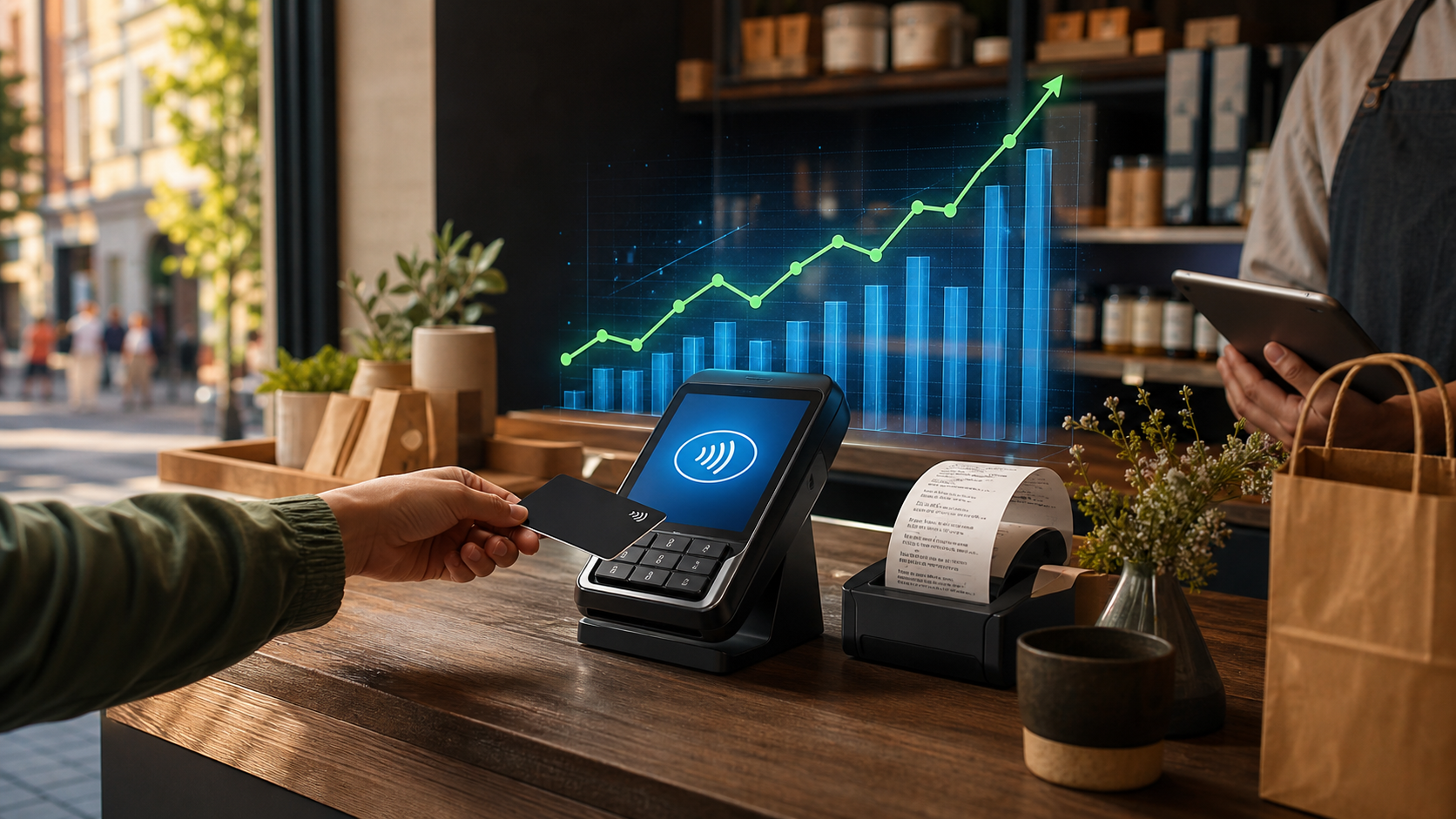
Fiserv's small-business spending data showed a modestly positive picture for U.S. merchants, with sales growth supported by higher tickets and a retail rebound. The company's Small Business Index is useful because it is built from payment activity across a large merchant base rather than only survey responses. For payment operators, that makes it a practical signal of real consumer behavior at the point of sale.
The data points to an economy that is still moving, but not uniformly. Sales can rise because more people are buying, because average tickets are higher, or because sector mix changes. Those drivers have very different meanings for processors, acquirers and small-business software platforms. A merchant that is growing through higher prices may not feel the same health as one that is growing through more foot traffic.
Why payment data matters
Payment processors see economic shifts early because they sit close to the transaction. Card, cash, check and point-of-sale data can show whether consumers are shifting from discretionary goods to essentials, whether restaurants are losing visits, whether gasoline tickets are changing and whether retail foot traffic is recovering. This makes processor data a valuable companion to government statistics and merchant sentiment surveys.
For banks and acquirers, small-business performance affects risk, volume and product demand. When merchants see stable sales but weaker transaction counts, they may need working capital, loyalty tools, pricing analytics or inventory support. When transaction counts improve, they may invest in terminals, e-commerce, software integrations or marketing. Payments data helps providers target those needs more intelligently.
What operators should read beneath the headline
The most important metric is not a single index number. Operators should look at the combination of sales growth, average ticket growth and transaction count. If sales rise mainly because of higher tickets while transactions fall, the merchant may be relying on price increases rather than demand. If transaction count improves while tickets stabilize, the merchant may be seeing healthier customer activity.
Sector mix also matters. Retail, restaurants, services, gasoline and health-related categories have different margins and payment needs. A restaurant facing lower foot traffic may need loyalty and order-ahead tools. A retailer seeing renewed store visits may care more about inventory, omnichannel returns and fraud controls. A service business may need recurring billing, invoices and appointment-linked payments.
Processor strategy
For payment processors, small-business data supports a more consultative model. Rather than selling acceptance alone, providers can use transaction insights to help merchants understand timing, demand, customer behavior and operational gaps. Clover-style point-of-sale ecosystems, dashboards and embedded banking services become more valuable when they translate raw transaction flows into decisions.
The same data can inform underwriting and retention. A processor that sees declining traffic in a merchant category can proactively offer working-capital options, fee flexibility or software tools before churn occurs. A merchant with strong growth may be ready for online ordering, loyalty, payroll, lending or multi-location support. The payment relationship becomes a growth relationship.
Signal to watch
The key question for the remainder of 2026 is whether modest sales growth becomes broader transaction growth. Higher ticket sizes can support processor revenue in the short term, but sustained merchant health depends on real customer activity. Payment companies should watch average ticket, transaction count, sector rotation and regional patterns together.
Small-business payments are a window into the operating economy. For acquirers, ISVs and banks, the strongest response is to turn that window into merchant-facing intelligence. Merchants do not only need to accept payments. They need to understand what those payments say about their business.
Merchant segments to monitor
Processors should avoid reading small-business growth as a single national story. Restaurants, retail, personal services, professional services and fuel merchants react differently to inflation, wages, local tourism and consumer confidence. A modest headline can hide pressure in one category and resilience in another. Segment-level analysis is therefore essential for product and risk teams.
Regional patterns matter too. A processor with strong local visibility can identify where merchants need lending, where they need software, where they need fraud support and where they may be ready for expansion. The closer a provider gets to merchant operating data, the more useful its advice becomes.
Editorial view
The most important lesson from processor spending data is that payments are an economic sensor. Every authorization and settlement record carries signals about demand, pricing, customer behavior and merchant health. Providers that turn those signals into understandable guidance can deepen merchant relationships.
Small businesses do not need another abstract dashboard. They need plain answers: are customers visiting less often, are tickets rising because of price, are refunds increasing, are certain categories slowing and what should the merchant do next? Payment companies that answer those questions will stand out from commodity acquirers.
Source: Fiserv