What happened
PayPal's July 2026 Open release notes added a set of enterprise payment capabilities across acceptance, optimization, risk and money movement. The updates include Visa Account Funding Transactions, additional alternative payment methods through Braintree orchestration connections, EFTPOS acceptance for Australian merchants, support for 3DS data-only savings opportunities, Google Pay vault import, fraud tooling enhancements, SEPA Instant payouts and payee verification for SEPA payouts.
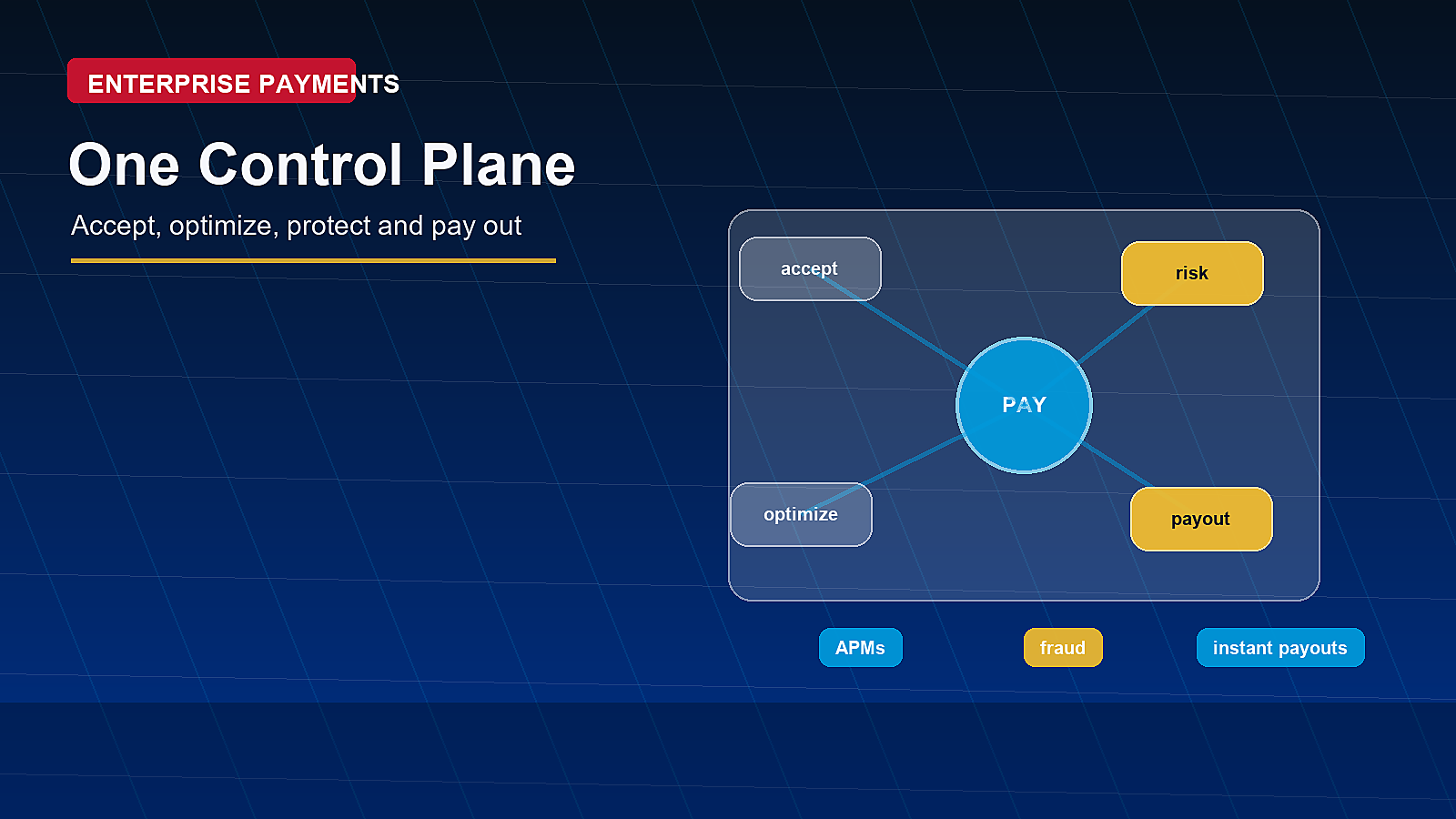
The breadth of the update is the story. Enterprise merchants are not asking for one isolated feature. They need a control plane that can accept more methods, optimize authorization, reduce fraud, preserve stored credentials, support local rails and move funds quickly. PayPal Open is positioning around that multi-layer need.
Acceptance is becoming local and specialized
The addition of Twint, Bizum, PayU and Skrill through orchestration connections reflects the reality of cross-border commerce. Global merchants cannot rely only on international cards. In many markets, local wallets, bank transfers and domestic payment methods affect conversion. A buyer who recognizes the payment method is more likely to complete checkout.
EFTPOS support for Australian merchants points in the same direction. Domestic debit routing and local network acceptance can affect cost, authorization and customer preference. Enterprise payment stacks increasingly need routing intelligence across global and domestic networks rather than a single default acceptance path.
Optimization and migration
Google Pay vault import is a practical but important migration feature. Stored payment credentials are valuable because they reduce checkout friction. When a merchant changes providers or consolidates platforms, asking customers to re-add wallets can create churn and lost conversion. Importing existing wallet tokens into a new vault can make platform migration less painful.
Support for richer 3DS data-only programs also shows how optimization is moving into the pre-authorization layer. Merchants want to provide enough data to issuers to improve confidence without adding unnecessary customer friction. The best checkout experience is not always the one with the fewest controls. It is the one with the right controls applied invisibly where possible.
Fraud and payout signals
The fraud updates show enterprise risk tooling becoming more configurable. Merchants want machine-learning protection, custom lists, allowlists and controls that reflect their own customer and order attributes. A marketplace, travel business and subscription merchant may all need different rules. A one-size fraud system can create either losses or false declines.
On the payout side, SEPA Instant and payee verification matter because merchants increasingly compete on how quickly they can move funds to sellers, contractors, creators, suppliers or customers. Fast payout is not enough if money is misdirected. Verification before payout helps reduce failed transfers, operational repairs and customer support escalations.
Operator implications
Enterprise merchants should read the update as a reminder that payment architecture is modular. Acceptance, optimization, fraud, payout, token vaulting and local method coverage need to work together. A merchant that optimizes only checkout may still lose money through payout delays, fraud losses, reconciliation gaps or poor migration planning.
Payment providers should also note the direction of competition. Feature lists are becoming broader because merchants want fewer operating surfaces. The winning provider does not simply process the transaction. It helps the merchant manage the full payment lifecycle from customer choice to fraud decisioning to funds delivery.
Strategic read
PayPal Open's July release notes show enterprise payments moving toward orchestration. The merchant wants a single layer that can connect many local methods, networks, wallets, risk signals and payout rails without creating a new integration project for every market.
For NXBits readers, the practical takeaway is that payment infrastructure is becoming a control plane. Merchants will increasingly choose platforms that combine method coverage, optimization, fraud controls and money movement into one governed operating model.
Roadmap for payment teams
The practical value of this development depends on whether operators turn it into a roadmap. For merchant acquiring teams, the first step is to identify the exact workflow affected by the news, not just the technology named in the announcement. A useful internal memo should state which customer journey changes, which back-office process changes, which teams need to approve the change and which metric will prove that the change improved the payment operation.
The second step is to separate rail capability from operating readiness. A new rail, API, rule, platform or data layer may be available, but that does not mean a bank, PSP, merchant or fintech can safely expose it to customers. Readiness includes support scripts, reconciliation rules, exception queues, fraud review paths, treasury sign-off, product documentation and customer-facing language that avoids overpromising.
Acquiring and merchant teams should measure authorization rate, refund timing, dispute quality, settlement predictability, checkout completion and the operational cost of supporting each additional payment method.
Treasury and B2B teams should map approval workflows, payment limits, reconciliation fields, ERP touchpoints, counterparty onboarding and exception handling before changing the rail used for material flows.
Risk teams should document which signals are used before payment release, how false positives are reviewed, how cases are escalated and which customer warnings are tested for comprehension.
What to monitor next
Over the next quarter, the most important signal will be whether PayPal Open release notes and the surrounding ecosystem move from announcement to repeatable implementation. Payment teams should look for pilot participants, geographic expansion, pricing details, certification requirements, uptime data, case studies and evidence that customers or merchants can use the capability without manual workarounds.
A second signal is how competitors respond. If paypal open's july updates show enterprise payments moving toward one orchestrated control plane becomes part of a broader market pattern, similar capabilities will appear in processor roadmaps, bank product updates, gateway integrations, risk vendor tools or regulator consultations. That competitive response usually tells operators whether the news is a one-off feature or the beginning of a new baseline expectation.
The final signal is operational friction. Payments innovation succeeds when it reduces hidden work: fewer failed transactions, fewer support tickets, cleaner ledger entries, better fraud outcomes, faster onboarding, stronger customer confidence or lower trapped liquidity. If the new capability creates another dashboard, another manual exception queue or another ambiguous settlement process, adoption will slow even if the headline sounds advanced.