What happened
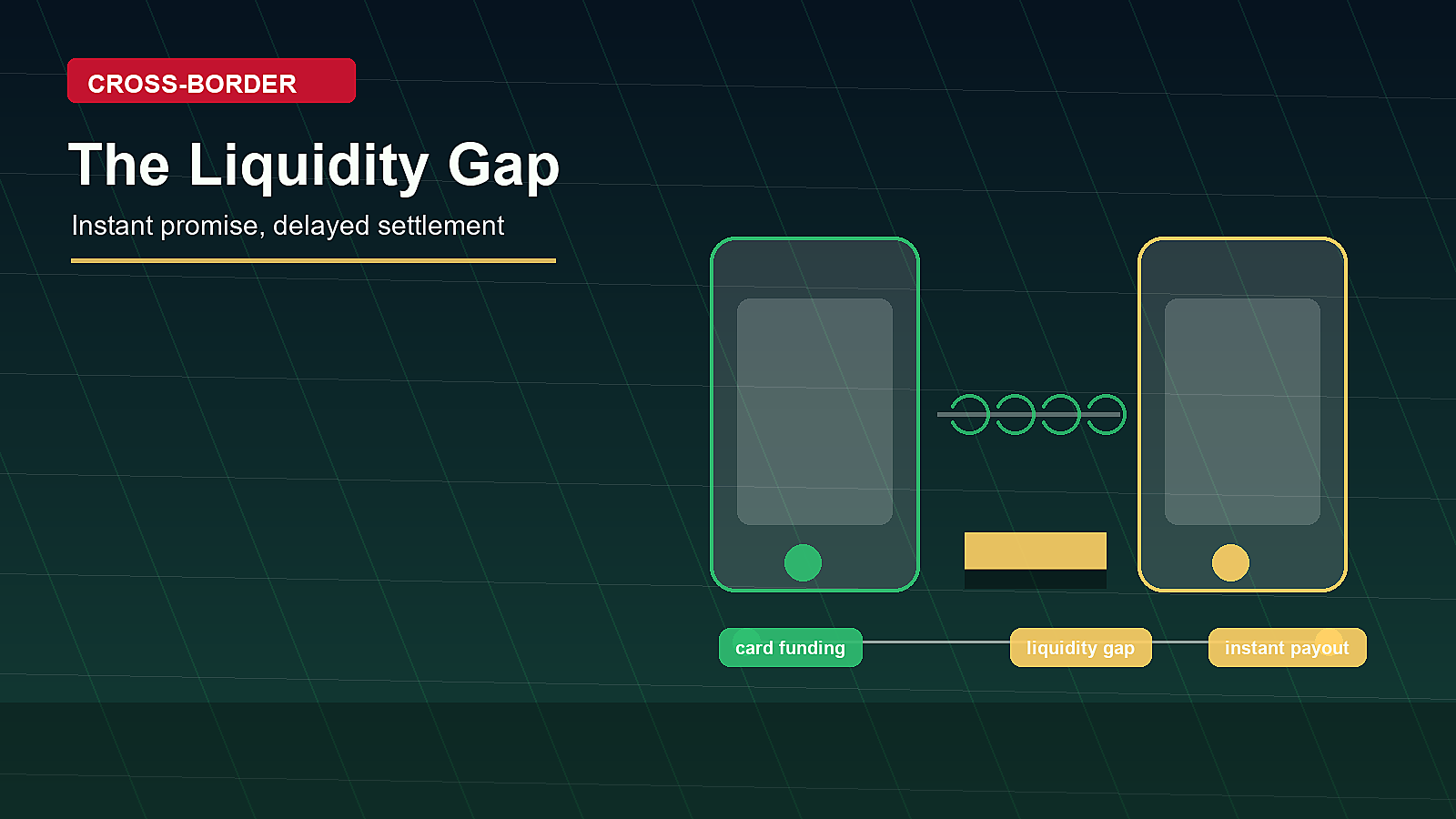
Adyen published a July 2026 payments brief on the hidden cost of payments for remittance platforms, focusing on liquidity gaps, payment acceptance and authentication friction. The core issue is familiar to anyone operating cross-border money movement: customers expect transfers to feel instant, while the card or funding transaction behind that transfer may not settle to the remittance provider for days.
That timing mismatch creates a working-capital problem. The platform often pays out or commits to payout before it has fully received funds from the original payment method. At scale, that means the provider is financing the customer promise. During seasonal peaks, holidays or major migration-linked remittance periods, the liquidity requirement can grow quickly and directly affect margins.
Why this matters
Remittance is a high-trust, low-margin category. Customers send money for family support, education, emergencies, travel, bills and small-business needs. They care about speed and reliability, but they are also sensitive to fees and exchange rates. If a platform cannot manage settlement timing efficiently, it may have to hold more capital, raise fees or limit transaction speed during peak periods.
The challenge is not only treasury. Acceptance performance matters too. If a customer's card payment is declined at the funding stage, the transfer may be abandoned. Remittance customers may use cards issued in one country while funding a transfer to another, creating more cross-border issuer risk, authentication checks and conversion challenges than a normal domestic e-commerce purchase.
Authentication as conversion risk
Strong customer authentication and 3D Secure exist for good reasons, but blanket friction can damage remittance conversion. A returning customer sending a regular monthly transfer to the same recipient should not always be treated like an unknown high-risk user. Risk systems need to recognize trusted patterns while still detecting account takeover, coercion, mule behavior and unusual beneficiary changes.
That requires more than a simple approve-or-decline engine. Payment providers need tokenization, device history, issuer data, transaction pattern recognition, local processing where available and intelligent retry logic. The goal is not to avoid authentication. The goal is to apply it where it reduces risk rather than where it merely interrupts a legitimate transfer.
What providers should evaluate
Remittance companies should evaluate payment partners through a liquidity lens. Can the provider support same-day or faster settlement? Does it rely on multiple intermediaries? Can it process locally in key source markets? Does it help recover legitimate declines before customers abandon the transaction? Can the platform distinguish first-time users from repeat corridors and trusted recipients?
They should also ask how payment data flows into risk, reconciliation and treasury systems. A fast payment provider that creates messy reporting may not solve the actual operating problem. The best setup will make payment acceptance, settlement timing, fraud controls and finance reporting work together rather than forcing teams to stitch the picture together manually.
Operator implications
For payment gateways and acquirers, remittance is a demanding vertical because the transaction is emotionally important and operationally complex. Winning this market requires local acquiring coverage, high authorization performance, flexible authentication, strong sanctions and AML controls, clear pricing and payout reliability. A generic card processing model is often not enough.
For remittance platforms, the strategic lesson is to treat payments as balance-sheet infrastructure. The checkout page may last seconds, but the settlement and liquidity implications can last days. Platforms that optimize only front-end conversion may miss the deeper economics of funding transfers before funds settle.
Strategic read
The remittance market is being pulled in two directions. Customers want transfers that feel immediate and inexpensive. Regulators and risk teams require strong controls. Finance teams need liquidity discipline. Payment providers that can connect those needs will become strategic partners rather than commodity processors.
The hidden cost of remittance payments is therefore not hidden to operators anymore. It sits in prefunding, failed authorizations, authentication abandonment, local processing gaps and reconciliation work. Solving it is one of the clearest opportunities in cross-border payment infrastructure.
Roadmap for payment teams
The practical value of this development depends on whether operators turn it into a roadmap. For b2b payments teams, the first step is to identify the exact workflow affected by the news, not just the technology named in the announcement. A useful internal memo should state which customer journey changes, which back-office process changes, which teams need to approve the change and which metric will prove that the change improved the payment operation.
The second step is to separate rail capability from operating readiness. A new rail, API, rule, platform or data layer may be available, but that does not mean a bank, PSP, merchant or fintech can safely expose it to customers. Readiness includes support scripts, reconciliation rules, exception queues, fraud review paths, treasury sign-off, product documentation and customer-facing language that avoids overpromising.
Treasury and B2B teams should map approval workflows, payment limits, reconciliation fields, ERP touchpoints, counterparty onboarding and exception handling before changing the rail used for material flows.
Acquiring and merchant teams should measure authorization rate, refund timing, dispute quality, settlement predictability, checkout completion and the operational cost of supporting each additional payment method.
Payment operations teams should translate the news into live workflow changes rather than treating it as a market headline. Reach, reliability, controls and reconciliation should all be measured.
What to monitor next
Over the next quarter, the most important signal will be whether Adyen and the surrounding ecosystem move from announcement to repeatable implementation. Payment teams should look for pilot participants, geographic expansion, pricing details, certification requirements, uptime data, case studies and evidence that customers or merchants can use the capability without manual workarounds.
A second signal is how competitors respond. If remittance platforms are running into a liquidity gap behind instant customer promises becomes part of a broader market pattern, similar capabilities will appear in processor roadmaps, bank product updates, gateway integrations, risk vendor tools or regulator consultations. That competitive response usually tells operators whether the news is a one-off feature or the beginning of a new baseline expectation.
The final signal is operational friction. Payments innovation succeeds when it reduces hidden work: fewer failed transactions, fewer support tickets, cleaner ledger entries, better fraud outcomes, faster onboarding, stronger customer confidence or lower trapped liquidity. If the new capability creates another dashboard, another manual exception queue or another ambiguous settlement process, adoption will slow even if the headline sounds advanced.