What happened
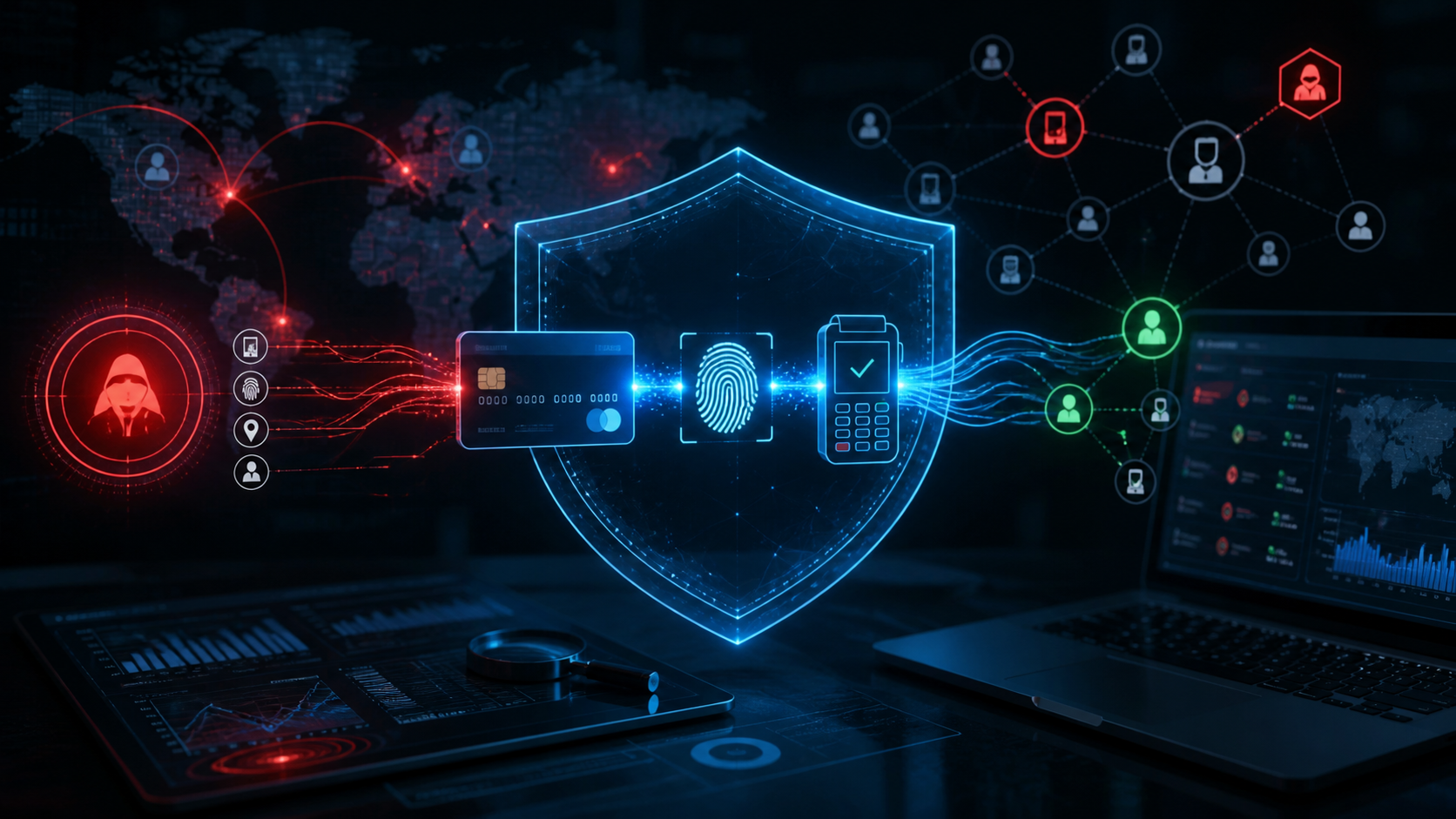
Visa announced an agreement to acquire BioCatch, a fraud intelligence company known for behavioral biometrics, device intelligence and account-risk detection. The strategic message is clear: the fight against payment fraud is moving further upstream. Instead of relying only on what happens at authorization, payment networks and banks want to understand risk before a transaction is even created.
BioCatch's domain sits around how people interact with digital banking and payment environments. The useful signals are often subtle: device reputation, session behavior, typing patterns, navigation rhythm, hesitation, copy-paste behavior and signs that a user may be under pressure from a scammer. Those patterns can help identify account takeovers, mule activity and authorized push payment scams that look legitimate to traditional payment checks.
Why it matters
Card fraud has become only one part of the risk landscape. Scams increasingly persuade real customers to move money themselves, which means the transaction may be authenticated, authorized and technically valid. That is difficult for legacy fraud systems because the payment credential is not always stolen. The customer may be present, but the intent has been manipulated.
For issuers and banks, this creates a need for risk intelligence across login, onboarding, beneficiary setup, account changes and payment initiation. By the time a transaction reaches final authorization, the best intervention window may have passed. Behavioral and device signals can widen that window, giving risk teams more time to challenge a session, slow a payment or trigger a targeted warning.
Impact on payment operators
Payment operators should expect fraud decisioning to become more continuous. The old model treated payment risk as a checkpoint. The newer model treats risk as a journey: account creation, authentication, device binding, payee creation, payment review, clearing and post-transaction monitoring. That requires data sharing, orchestration and governance across systems that often sit in different departments.
The acquisition also raises the bar for fraud vendors. Point solutions that only inspect transactions may struggle against tools that combine network data, issuer data, behavior and device intelligence. Banks will still need specialist systems, but they will increasingly ask whether those systems can feed a broader risk engine and whether the signals are explainable enough for customer-facing interventions.
Customer experience tradeoffs
The challenge is to stop more fraud without turning every session into a high-friction experience. Behavioral intelligence can help because it may detect abnormal risk silently and reserve step-up challenges for suspicious cases. But it also requires careful tuning. False positives can lock out good customers, slow urgent payments and create support pressure. A fraud tool is only as strong as the operating model around it.
Privacy and consent will also matter. Device and behavior signals are powerful, but financial institutions must handle them with clear governance and defensible use cases. Customers may accept invisible protection when it prevents scams, but regulators will expect controls around data retention, model fairness, explainability and cross-border processing.
Signal to watch
Visa's move reinforces a broader industry pattern: networks are becoming risk intelligence platforms as much as payment routing platforms. Mastercard, Visa, large processors and fraud specialists are all investing in AI-assisted detection, behavioral analytics and identity controls because payment trust now begins before checkout.
The next phase will be integration. If BioCatch capabilities become easier for issuers, banks and fintechs to consume through Visa's ecosystem, behavioral fraud intelligence could become a standard layer in digital payments. The operators that benefit most will be those that pair better signals with fast case management, strong customer education and clear escalation workflows.
Bank readiness checklist
Banks that adopt behavioral intelligence should prepare their operations before turning on aggressive controls. Fraud teams need playbooks for account takeover, remote-access scams, mule-account behavior and suspicious payee setup. Contact-center teams need scripts that explain why a payment was delayed without revealing too much about the risk model. Product teams need customer warnings that are specific enough to be useful.
The strongest deployments will connect behavioral signals to case management. A high-risk session should not only produce a score. It should trigger a workflow: review the device, inspect recent account changes, check beneficiary history, analyze transaction timing and decide whether the customer needs education, step-up authentication or temporary payment blocking.
Editorial view
Visa's BioCatch move shows that the center of payment fraud is shifting from stolen credentials to manipulated intent. That is a harder problem because the victim may appear to be the legitimate user. Behavioral analysis cannot solve scams by itself, but it can provide earlier warnings that traditional authorization systems miss.
The industry should treat this as a signal to modernize fraud programs end to end. Better models are useful only when supported by fast operations, clear customer communication and policies that balance protection with access. Fraud intelligence is becoming a product experience, not only a risk function.
Source: Visa