What happened
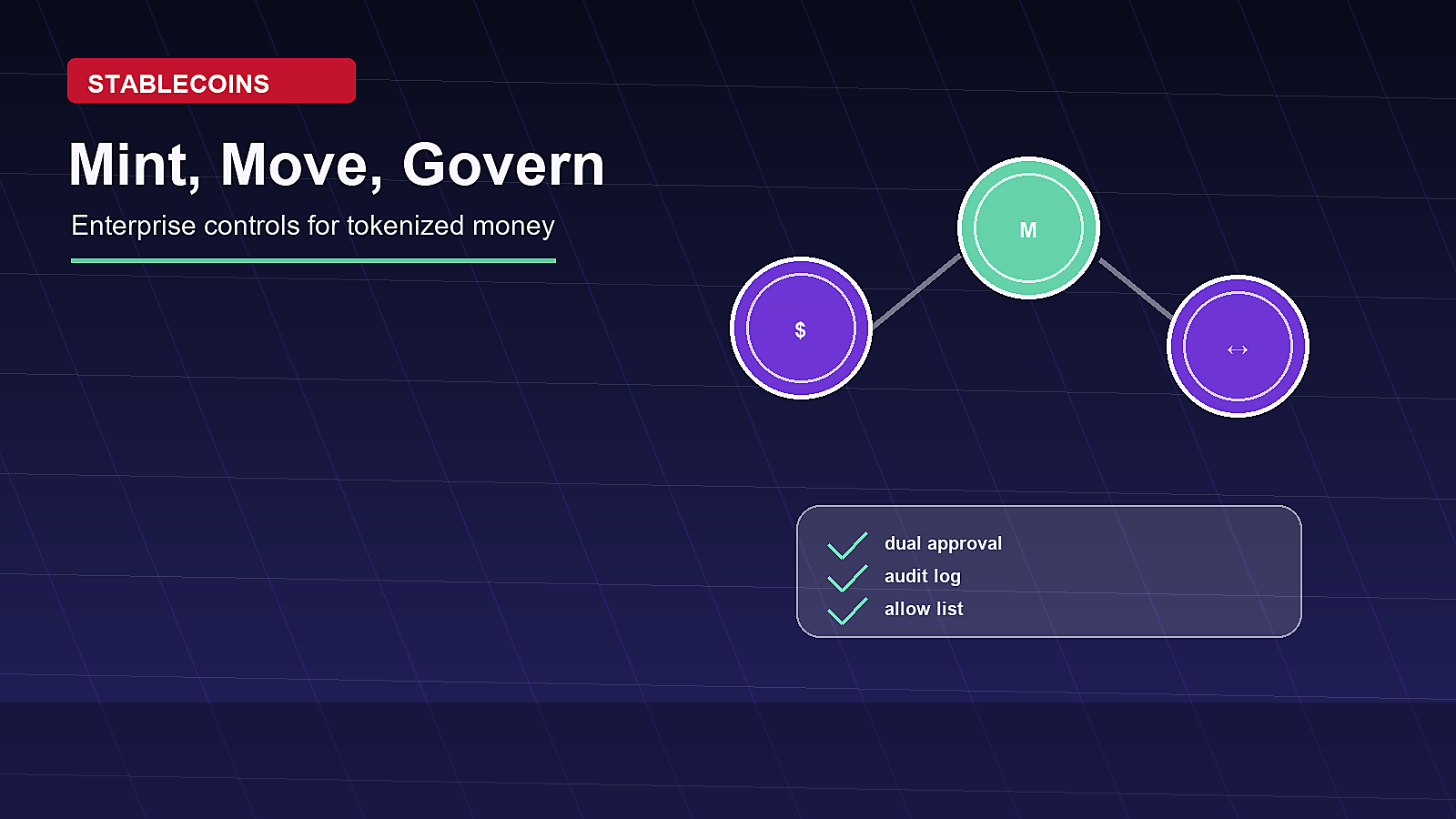
Visa introduced the Visa Stablecoin Platform in July 2026, describing it as an enterprise environment for financial institutions, fintechs and payment providers to access stablecoin capabilities through Visa. The platform begins with support for Open USD and includes on-chain wallet infrastructure, minting and burning connectivity, policy controls, approval workflows, audit logging and interoperability with Visa's broader stablecoin settlement, card and money-movement capabilities.
The strategic shift is important. The market has spent years asking whether stablecoins can be used for payments. Visa's framing starts from a more practical question: can institutions operate stablecoin flows safely, with governance, controls and integration into existing treasury and settlement systems? That is where enterprise adoption will be won or lost.
Why operations matter more than token hype
Institutions do not adopt a new payment rail because it is fashionable. They adopt it when it improves liquidity, reach, speed or product design without creating unacceptable compliance and operational risk. A stablecoin payment that is technically fast but difficult to approve, reconcile, audit or redeem is not enterprise-ready. The back-office workflow matters as much as the blockchain transaction.
Visa's platform approach recognizes that many banks and fintechs do not want to assemble wallet custody, token issuance connections, blockchain monitoring, approval policies and audit trails from scratch. They want a managed operating layer that lets them test stablecoin use cases while staying close to familiar network controls and institutional governance.
Use cases to watch
The most likely early use cases are treasury movement, settlement, platform balances, cross-border liquidity and embedded payment products. A fintech could use stablecoin flows to manage off-hours liquidity. A bank could test tokenized deposit or stablecoin-adjacent products for corporate clients. A payment provider could use stablecoin settlement as one option inside a wider money-movement stack.
Retail checkout may receive attention, but enterprise settlement and treasury are more immediate. Stablecoins solve their clearest problem where timing, geography and liquidity create friction. If a company can move value after banking hours, reduce prefunding or support global counterparties more efficiently, the stablecoin rail has a business case.
Control design
The control details are central. Dual approval, audit logs, passkeys and transfer allow lists are not decorative features. They are the difference between a crypto-style wallet experience and an enterprise finance workflow. Treasury teams need to define who can initiate a transfer, who can approve it, which counterparties are permitted, what limits apply and how exceptions are reviewed.
This also creates a new governance question for institutions. Stablecoin operations may sit between treasury, payments, compliance, product and technology. If ownership is unclear, pilots can stall. Firms evaluating Visa's platform should define use-case ownership, risk appetite, accounting treatment, customer disclosures and fallback processes before launching customer-facing flows.
Competitive implications
Visa is not trying to be a crypto wallet company in the consumer sense. It is trying to provide a trusted institutional bridge between digital assets and established payment flows. That puts pressure on processors, banks and fintech infrastructure providers to show how their stablecoin capabilities fit into existing operations rather than only demonstrating technical movement on-chain.
The move also reinforces the idea that payment networks want to orchestrate multiple rails. Cards, account transfers, tokenized deposits and stablecoins can all sit inside a broader network value proposition if the provider handles risk, identity, acceptance and settlement. The future may be less about one winning rail and more about intelligent routing across many.
Strategic read
Visa Stablecoin Platform is a sign that the stablecoin discussion is maturing. The next stage is not about proving that tokens can move. It is about proving that institutions can run tokenized payment operations with the same seriousness they apply to bank rails.
For payment operators, the practical question is whether stablecoin infrastructure can reduce friction while preserving trust. If managed platforms can make minting, movement, approvals, redemption and reconciliation feel normal to enterprise teams, stablecoins will move from experiments into payment operations.
Roadmap for payment teams
The practical value of this development depends on whether operators turn it into a roadmap. For stablecoins teams, the first step is to identify the exact workflow affected by the news, not just the technology named in the announcement. A useful internal memo should state which customer journey changes, which back-office process changes, which teams need to approve the change and which metric will prove that the change improved the payment operation.
The second step is to separate rail capability from operating readiness. A new rail, API, rule, platform or data layer may be available, but that does not mean a bank, PSP, merchant or fintech can safely expose it to customers. Readiness includes support scripts, reconciliation rules, exception queues, fraud review paths, treasury sign-off, product documentation and customer-facing language that avoids overpromising.
Stablecoin teams should define supported tokens, redemption paths, custody model, wallet controls, reserve disclosures, accounting treatment and fallback rails before moving from pilot to production.
Payment operations teams should translate the news into live workflow changes rather than treating it as a market headline. Reach, reliability, controls and reconciliation should all be measured.
Treasury and B2B teams should map approval workflows, payment limits, reconciliation fields, ERP touchpoints, counterparty onboarding and exception handling before changing the rail used for material flows.
What to monitor next
Over the next quarter, the most important signal will be whether Visa and the surrounding ecosystem move from announcement to repeatable implementation. Payment teams should look for pilot participants, geographic expansion, pricing details, certification requirements, uptime data, case studies and evidence that customers or merchants can use the capability without manual workarounds.
A second signal is how competitors respond. If visa stablecoin platform turns stablecoin curiosity into an enterprise operations problem becomes part of a broader market pattern, similar capabilities will appear in processor roadmaps, bank product updates, gateway integrations, risk vendor tools or regulator consultations. That competitive response usually tells operators whether the news is a one-off feature or the beginning of a new baseline expectation.
The final signal is operational friction. Payments innovation succeeds when it reduces hidden work: fewer failed transactions, fewer support tickets, cleaner ledger entries, better fraud outcomes, faster onboarding, stronger customer confidence or lower trapped liquidity. If the new capability creates another dashboard, another manual exception queue or another ambiguous settlement process, adoption will slow even if the headline sounds advanced.